
Textile Design Lab by Pattern Observer
Historically there have been few opportunities for learning textile print design online. This niche of the design industry is a competitive one and its trade secrets have been closely held. But along with the surge in popularity for surface pattern design, and easier access to digital sharing platforms, there are now more choices for online professional development. With this blog series I’m sharing my experiences with four: Textile Design Lab, The Print School, The Print Life, and Natasha Gulliford. All have helped me pivot and grow into a working freelance textile print designer. They also have unique strengths. I regularly get DMs asking about them, so thought I would share to help you make the best decisions for your time and resources. Short on time? Jump down to the Round Up
All links are unaffiliated.
The Textile Design Lab is a US-based online membership program that offers learning and professional development to a global community of textile print and surface pattern designers. Started by Michelle Fifis in 2011, it was one of the first in the industry to offer this type of learning. Michelle is multi-talented; she writes the popular Pattern Observer blog and runs her Pattern Observer Studio designing prints.
When I began my career pivot from graphic design, I started with the Textile Design Lab. It was Michelle’s interest and professional experience in the fashion industry that made “the Lab” one of the very few online options providing some insight into designing prints for apparel. There was also an unmatched generosity in giving personalized feedback and encouragement. I grew tremendously there and built a network of lovely peers, some I now consider close friends.
Today the Lab has a team of staff experts providing insight into all the various markets. The experts are broadly experienced but have specialty focus in areas such as kids, quilt and craft, paper, fashion, home decor, product development, licensing business, and Adobe Illustrator and Photoshop software. Yes, that’s a lot; the Lab strives to provide something for every designer.
Guest Experts
To increase the diversity of content and perspective, the Lab offers an array of guest expert presentations on a variety of focused topics. Presentations have been from the resident staff experts, long-time Lab members, as well as professionals in the industry.
One of my favorite guest experts, and very popular with many other Lab members, was Fizah Malik. Fizah is a highly experienced and successful textile print and surface pattern designer working as a top-selling freelance designer for multiple studios around the globe. Fizah gave the Lab a great presentation on the basics of working with print studios on consignment. She followed that up with an excellent series of five concise and very informative tutorials showing her design process for different print styles and their efficient file preparation in Photoshop. If you have an interest in freelancing for fashion print studios this one is highly recommended.
Content
Along with the guest presentations, the Textile Design Lab offers a wide array of course content. Topics range from design and portfolio development to creativity exercises and software and technical repeat training. Sales and marketing strategy classes and goal setting and mindset development have been emphasized more in the last few years.
Core to the program are self-paced, on-demand video classes. Some of these core classes are also highlighted for a few weeks during the year to learn and interact together with a group of fellow Lab members. The Sellable Sketch is one of the original classes that steps students through the design process. Starting with customer visualization and trend research, designers create mood boards, and develop sketches into a collection of coordinating digital print designs.

Designs made in 2018 for a Chelsea Challenge, vintage Hawaiian theme, while studying at Textile Design Lab.
The monthly design challenges, affectionately know as Chelsea Challenges, are named after Chelsea the Lab’s manager. The challenges are intended to simulate the experience of working from a design brief. Recent design briefs have ranged from Photographic Florals, to Maximalist Interiors, and also Holiday Gift Wrap. The goal is to develop a mini collection of three to five prints. The challenges are fun and can be very useful to build a portfolio.
And there is much more. The short Speedy Design Challenges will prompt you to create a themed design in one day, and help you gauge your technical proficiency. Hour-long creative meetups on Zoom help to break out of a design rut and learn new art techniques. Monthly group meetings to review your goals helps with accountability. I could keep going with all that’s offered on the Lab.
But with all the different content and fun activities at Textile Design Lab, FOMO and overwhelm is real. The Lab’s content programming strategy aims to provide appeal for as many types of designers as possible. As a beginner, this is good. It gives you an opportunity to try different design for different markets. As you become more experienced and have a better understanding of your goals, choose your participation with intention.
WGSN
One very special benefit for members of the Lab is access to WGSN. This extremely expensive trend service is packed with authoritative trend information for current and future seasons. The access is offered occasionally along with some of the classes throughout the year. However, since WGSN is not easily affordable for a student or independent designer, even the brief access offered by the Lab can be worth the cost of membership for designers that are trend driven.
Platform
Unlike many other online learning opportunities in this field which have used Facebook Groups to host online communities, the Textile Design Lab is hosted on its own private membership website. Paid members must log-in to the website to access content and interact with the community and staff on the Forums. Members post questions for advice and discussion and JPG images of work to receive feedback and from the community and staff. The bulletin board style Forums are a bit old-school—comment notifications will come to you via email. Nevertheless it’s still useful to get feedback on your work and network with peers in a secure place. There’s daily participation in the community which makes it a really good place for new designers to network.
I applaud the Textile Design Lab for hosting its own site. It’s not an easy thing to manage. The website isn’t without its drawbacks however, primarily its search capability and organization. The large amount of content and activity in the Lab can be difficult to search or focus to your interests. The navigation is a little tricky; for new members it can be overwhelming to know where to start or how to interact. Good thing though, a site redesign is reportedly coming. And the community is always generous to help guide and answer questions.

If you are interested there’s a free tour of the Textile Design Lab so you can check it out for yourself.
Community
By far, the value of the Textile Design Lab is in the amount of personal feedback and interaction from the staff experts and community. It has a friendly and welcoming vibe. With around 500 members of different experience levels, the majority of active members tend to be from beginners to emerging professionals. If you are feeling lonely in your self-study towards professional print designer, this is a great group to get involved with.
There are many ways to connect with other members on the Lab. A highlight has been the weekly art critique hosted on Zoom. Members show their work and receive a live critique from one of the staff experts while Lab members chime in via the chat function. If you are a new designer and working on your portfolio, this can be a huge value.
The Lab’s new weekly Coloring Hour is a less formal meetup that started during the tumult of COVID. It’s a weekly Zoom that lets members meet and casually talk about life and design. I haven’t personally attended one of these, but all of the Lab’s live meetings are recorded and available for members to view later.
From actively participating on the lab over the years I have made a lovely group of designer friends. Shout out to Renea Lynzee, Jenny Bova, Dora Yvonne and more.
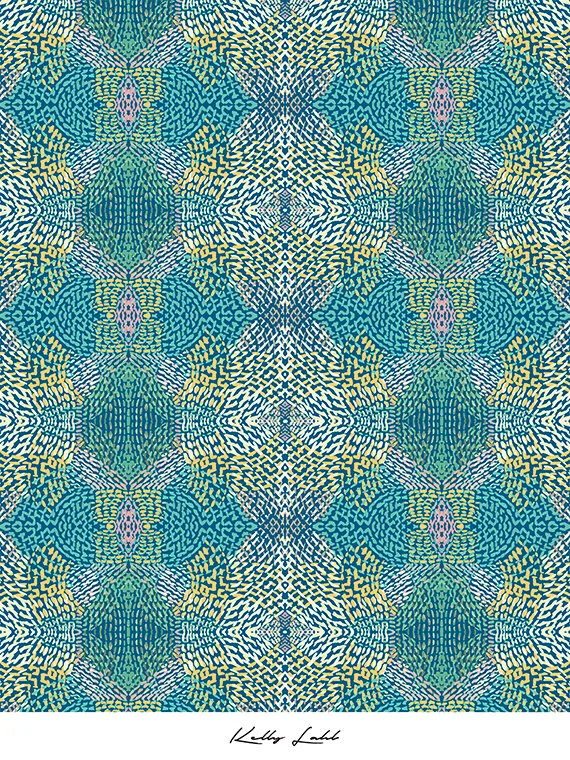
A hand painted, digitally manipulated design I made in the Textile Design Lab
Round Up (the condensed version)
The Textile Design Lab is a great place to get started and grow!
TEXTILE DESIGN LAB BENEFITS
PERSONAL FEEDBACK — Lots of direct, personal feedback and guidance from professionals
VARIETY — Many different live interaction opportunities and learning activities
COMMUNITY — Super friendly community for learning and networking, makes it great for new designers
VALUE — Amount of content and interactive experience great for price—at time of writing in 2021 membership price is $49/mo or $490/yr
TEXTILE DESIGN LAB THINGS TO CONSIDER
RELEVANCY — Depending on the experience and perspective of commenter, feedback may not be relevant for your particular market focus or aesthetic
VARIETY — Amount and breadth of content can be overwhelming — easy FOMO can distract you from your own focused goals
EFFICIENCY — Searching and navigating the website’s content could (and may soon) be improved
IMHO, BEST FOR
NEWER DESIGNERS — Breadth of content and activities gives an excellent overview of all the different areas in the industry
COMMUNITY BUILDING — Friendly supportive community with many opportunities for interacting
PORTFOLIO BUILDING — Generous feedback, personalized critiques, and design activities help to develop a portfolio of work to use to market yourself