
The Print School by Longina Phillips Designs
More reviews of The Print School courses.
Historically there have been few opportunities for learning textile print design online. This niche of the design industry is a competitive one and its trade secrets have been closely held. But along with the surge in popularity for surface pattern design, and easier access to digital sharing platforms, there are now more choices for online professional development. With this blog series I’m sharing my experiences with three: Textile Design Lab, The Print School, and The Print Life. All have helped me pivot and grow into a working freelance textile print designer. They also have unique strengths. I regularly get DMs asking about them, so thought I would share to help you make the best decisions for your time and resources.
Short on time? Jump down to the Round Up
All links are unaffiliated.
Longina Phillips Designs is a leading Australia based studio, creating and selling exclusive print designs and trend forecasting services to a global client list including Anthropologie, Givenchy, and Ralph Lauren. In 2018 they launched The Print School, teaching new designers to do the same.
When I discovered Longina Phillips Designs (LPD), I quickly became a complete fan girl. It’s not hard; just take a look at their Instagram feed. From the beginning of my journey to textile print designer, I always knew my interests were in fashion. Longina Phillips, undoubtedly, knows fashion. For me, it was an easy choice to soak up everything that I could to learn from them and aspire to this level of design and craftsmanship. So I was thrilled when they launched The Print School. I’ve purchased all their courses, except for their brand new —just about to start— Comprehensive Business Builder for Surface Designers course. I haven’t jumped on board for that one, but I’m eager to hear the reviews.
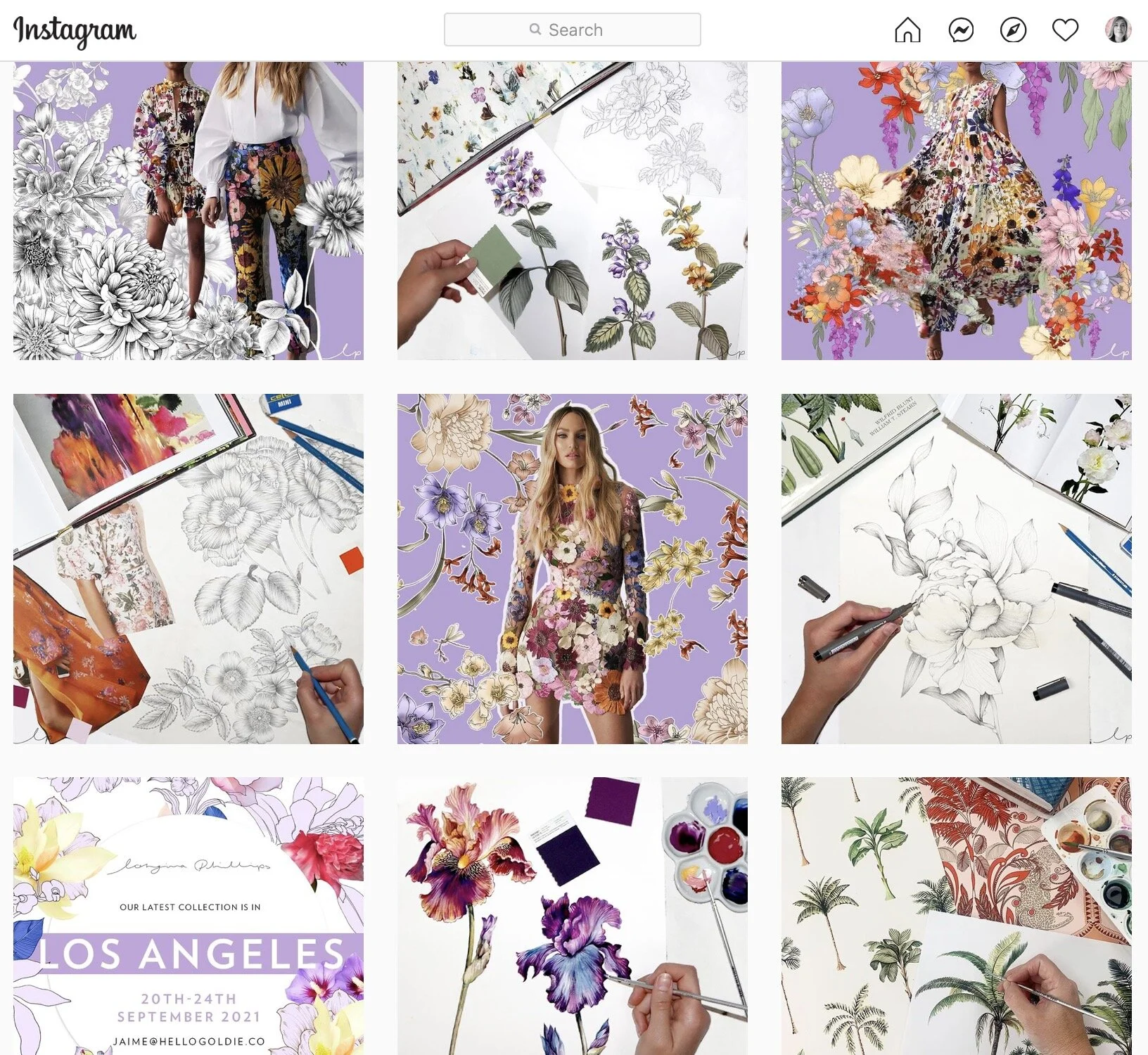
Photo: Longina Phillips Designs Instagram Feed
Lola — Anything’s Possible
Even though she hasn’t yet appeared in the courses, I can’t write on LPD without a bit about Lola Phillips. Lola is the studio’s founder and CEO, and she’s an icon in the industry. The Q&A video below shares just a sliver of the treasure chest of her sage advice. I love these early, casual LPD YouTube videos. They’re charming and personalize the people behind that glossy veil of sales marketing. Lola is also around on the socials, encouraging and supporting people, and I would bet that she will be making a debut in the new Business course.
Side note—I’m a real bibliophile—so yes, a trip to Sydney to peruse that impressive studio library is on my lifetime bucket list.

The Print School
The Print School offers on-demand, self-paced video classes taught by current (and past) pro studio designers at LPD. The topics are primarily on developing hand and digital studio skills to create popular commercial design styles, like florals, tropicals and paisleys. The focus is on traditional media—liquid watercolor dye, gouache paint, and fine pen on paper—which have long been the standard in the textile design industry. Since Longina Phillips Designs is known for their beautiful hand rendered designs, it makes sense they would be champions and teachers of making art this way. Their digital Photoshop courses will show how they turn that art into sellable prints, and productively maximize the art into multiple unique designs.
I encourage everyone interested in The Print School, if they haven’t already, to start with checking out the course descriptions on the website and all the various channels of media that LPD publishes, especially their blog. These will give you a really good taste for their current video editing, the type and depth of information, tone of voice, and the aesthetic.
I think we can all simply agree that any serious print designer would want to know what this authority in the industry has to teach. It’s valuable to know that the information you’re getting is from a trusted, experienced source. You will not have to sift through a million short tutorials to hopefully find useful bits information, or get confused by things that aren’t relevant to your style or industry. While The Print School course content translates to the broader surface pattern industry, it’s especially relevant for textile print design for fashion.
What About That Price?
With courses that average $500 US, the very common question I get is whether they are worth the heavy price. So I’ll address it up front. They were valuable for me at the time. But there isn’t an absolute yes or no for everyone, because learning isn’t a one-size-fits-all thing. We all have different goals, circumstances, and learning needs. The more you clarify your goals, and assess what you really need to learn, the question will be easier to answer.
I share my thoughts about the courses below, but do your research too. Look at the course outline and the video time length, and compare that with the recommendation of who the course is for. If it’s a beginner friendly course, expect that some of that course time is for reviewing beginner concepts. Note if there are extra documents such as templates, color palettes, and guide books. Decide if you prefer to work more independently, or need one-to-one personalized guidance. Contact The Print School if you have specific questions about what is included in the course.
It’s important to know that at this time they do offer a refund policy within 30 days, for those that aren’t happy with the purchase. To apply for the refund you’ll need to review all the class video content and show proof that you’ve completed the required assignments within the time limit. That may be unrealistic for people short on time. However, many digital products don’t offer refunds for obvious reasons—people abusing the policy. This refund policy is, at the very least, an effort to strive for happy customers.
However, I do not recommend taking on any kind of debt for any of the online learning opportunities that I’m reviewing. They’re not disappearing; to produce a profit they are designed to hang around for a few years, at least. So be good to yourself first. Save up and then make the investment if it’s right for you.
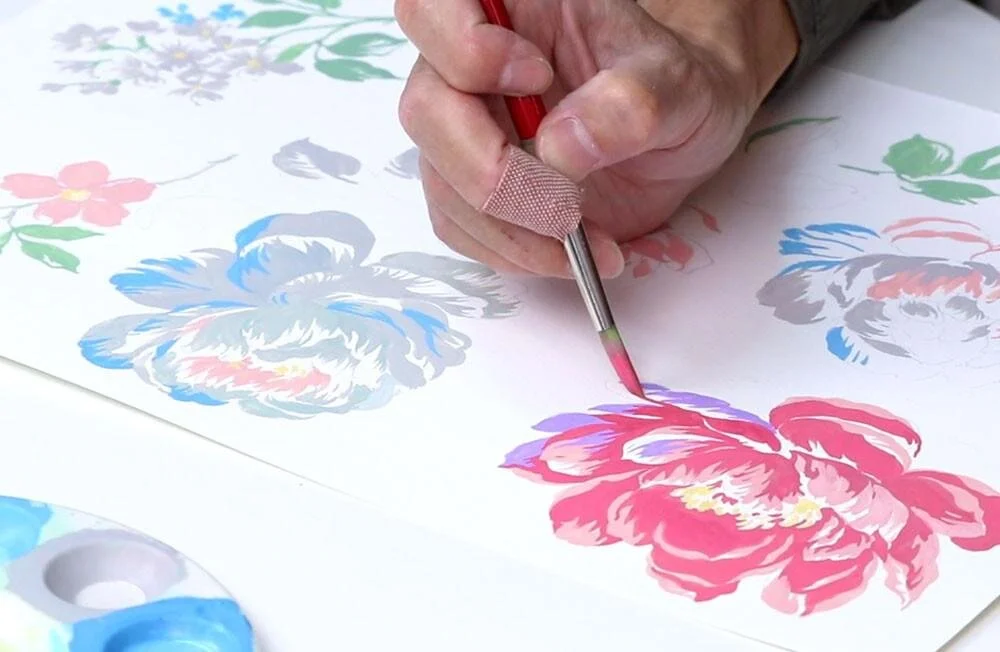
Photo: Courtesy Longina Phillips Design, Gouache Roses for Fabric Design
The Courses
There are now nine courses available by The Print School, and I’ve learned important things from all eight that I’ve purchased. I appreciate the focused content on building creative studio skills that are highly marketable.
The dialogue in the courses is scripted. It’s very concise and clear, but sometimes it can seem a bit formal if you’re used to learning from a more casual, candid teacher. The editing is so efficient that sometimes really important concepts are condensed into simple sentences that may not register as really important concepts.
The video is beautiful and modern, and very inspirational. It’s streamlined and edited, some better than others. But generally, they’re nicely done.
My brief thoughts on the courses I’ve taken
Floral Illustration for Fabric Design: An important, short foundational class. Overview of tools, materials and different techniques. Good for beginners, it includes tips for making your shading more refined.
Watercolor Florals for Fabric Design: Also a good, short, foundational class for beginners. This one is less unique compared to the myriad of watercolor classes on the market. But it has helpful tips to consider composition specific to textile design. This is one of the first classes made by The Print School, and the editing, while artful, is bouncy and gave me a bit of motion sickness. I hope they come back around to this one for updates. Or create an advanced watercolor class.
Paint Tropical Leaves in 5 Smart Steps: The tropical leaves class is the shortest class, and there are just enough directions to get you started on your way to becoming a gouache painter. Zoom—a longtime LPD artist— paints beautifully. It’s easy to watch and be in awe of his skill—and then doubt you can achieve that level of mastery—and leave it there, never picking up a brush. Nobody is expecting you’ll paint this way to begin. Push through any intimidation and give it a go. My tip (for all the courses) is to keep rewatching the video. Not because it’s confusing. Rewatch because there’s a lot to learn that isn’t outright said in the voice-over. By studying Zoom paint you’ll see how he handles the brush, varies the strokes, and how he develops and stylizes the details in layers.
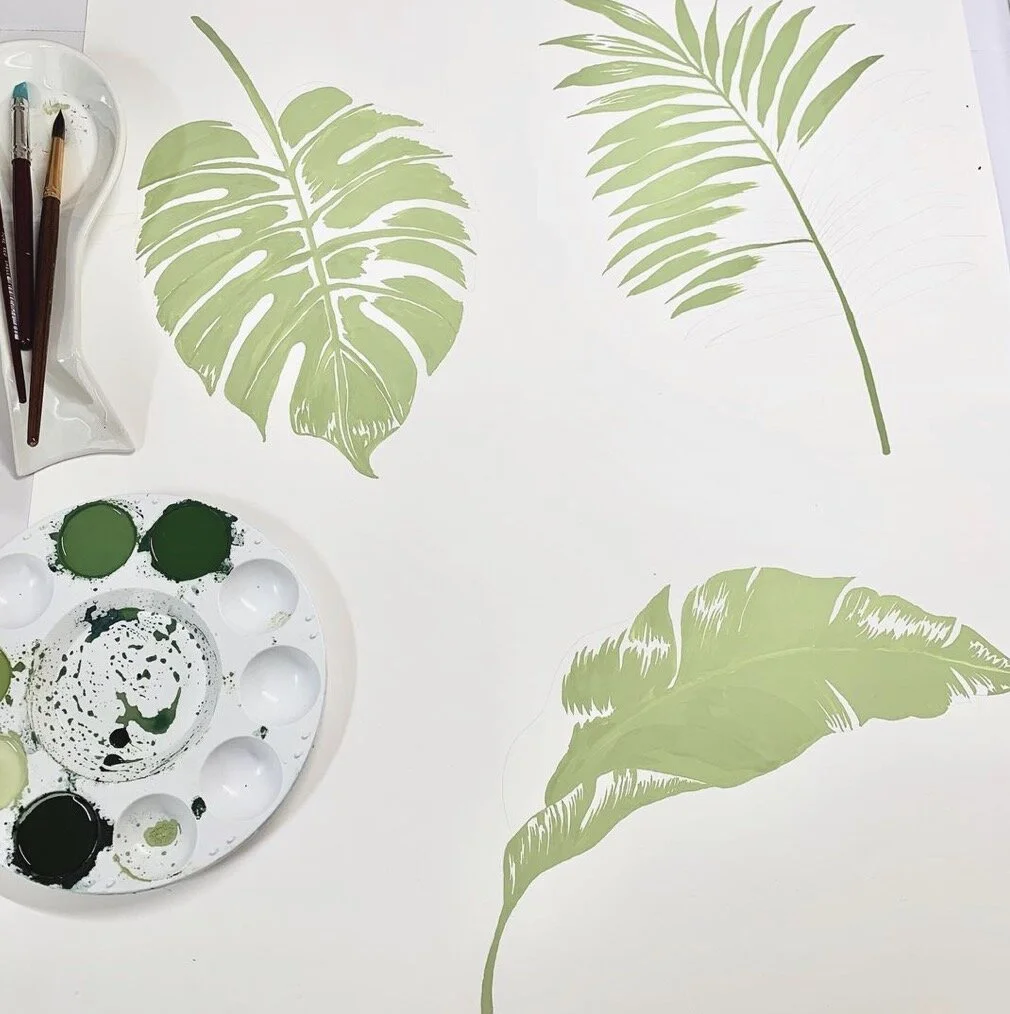
First layer of my gouache painted tropical leaves in progress .
Gouache Roses for Fabric Design: Drawing to Digital: I really love this class. It also features Zoom’s masterful painting. If you are interested in this flat gouache style, consider this one before the tropical leaves. It also has a Photoshop component. Along with a layout and recoloring, it shows how to first clean the scanned motifs, and different ways to color separate them.
Gouache Paisleys for Fabric Design: Also a really good class. Zoom shows a softer gouache style with pen accents. This covers border layouts too, and touches on drawing Jacobean flowers. It shows the best way to add texture. I do wish there was more detail on planning those tricky paisley layouts prior to creating motifs, but the course is packed with content to get started creating successful paisleys.
Photoshop for Fabric Design: Watercolor: This will get your watercolor digitized, cleaned and put into a commercial layout. It includes a really interesting way of manually color separating watercolor that produces really nice results. I haven’t seen this technique shown in any other class out there.
Photoshop for Fabric Design: Illustration: I learned a lot from this class, so I do recommend it, but it made me want to learn more techniques for handling illustration in Photoshop. I’m hereby advocating for The Print School to offer an Advanced Photoshop for Illustration class.
10 Stunning Commercial Designs in Photoshop: This is an excellent class. If you are comfortable using Photoshop but want to advance your skills and productivity, it shows more advanced tools and techniques, and creative design ideas to give your art mileage.
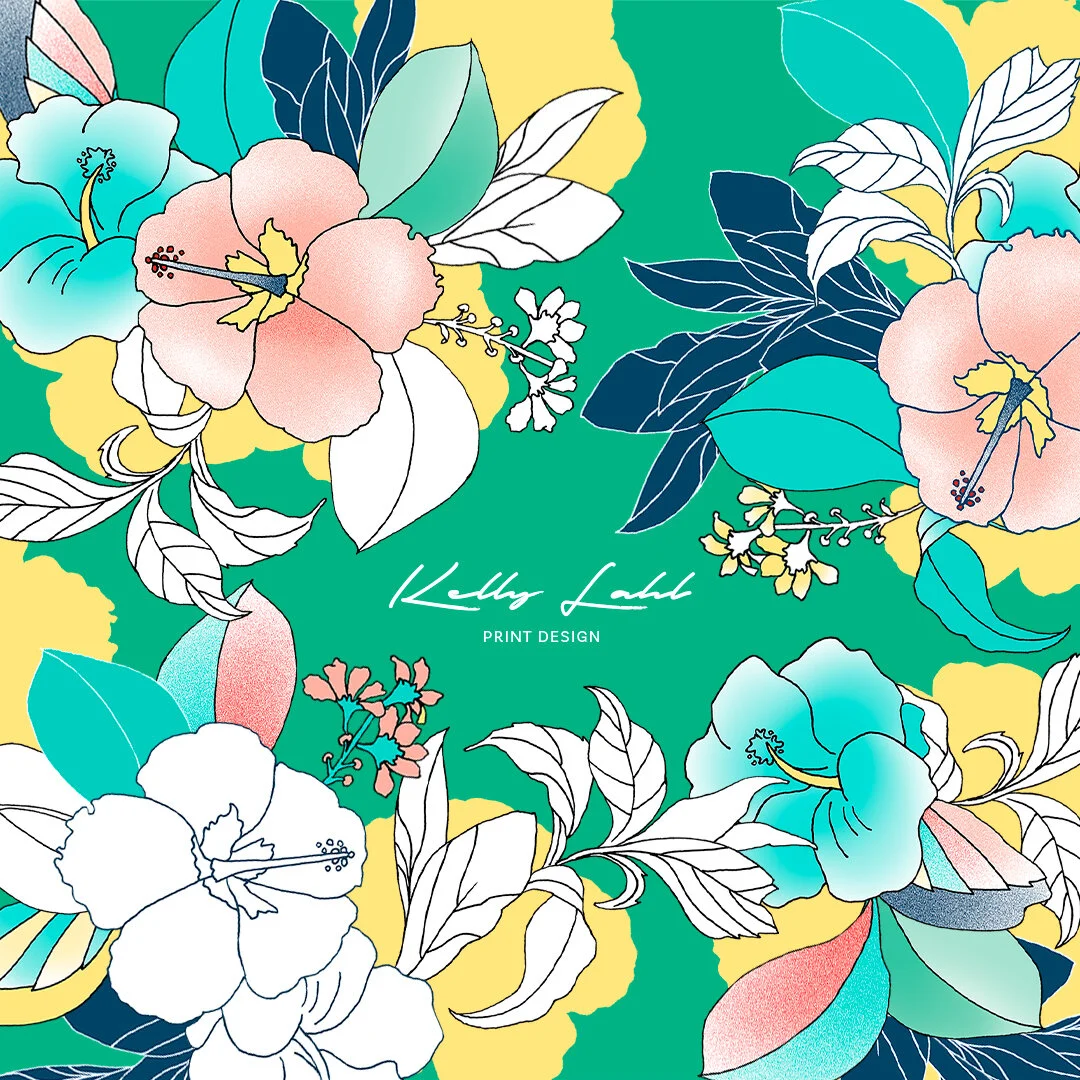
One of my first floral illustrations, trying different things while working through the Photoshop for Fabric Design: Illustration
The Platform and Community
The Print School courses are hosted on Kajabi, a digital classroom platform. It’s nicely organized and allows unlimited viewing. Questions are hosted in a private Facebook Group. There isn’t a lot of activity there, maybe a post every few days. Occasionally students do share their results from practicing, and someone from Longina Phillips will reply with brief comments. So you can get helpful feedback, but don’t expect lengthy critiques. This isn’t the place I recommend to go to for networking. However, The Print School is now offering live coaching calls with the new business course, so there may be opportunities for live coaching for the other classes in the future. Anything’s possible!
Round Up (the condensed version)
If you want to create more sophisticated, artful, and sellable designs—and have comfortable room in your budget—LPD’s Print School is a great place to develop professional design skills.
THE PRINT SCHOOL BENEFITS
TRUSTED — There is no wondering if these techniques are industry appropriate. They come from a successful studio with 30 years experience.
FOCUSED — Their point-of-view and philosophy, and related teaching, is direct, clear and consistent.
EFFICIENT — Organized and edited down to the essentials, the courses teach commercial skills in a manageable amount of time.
THE PRINT SCHOOL THINGS TO CONSIDER
VALUE — Premium pricing for the ease of learning from some of the industry’s best.
FEEDBACK — Someone from LPD will always respond with brief comment, but there is not lengthy critique of work.
COMMUNITY — Self-study, little community activity. But this may be different for the new Business course.
IMHO, BEST FOR
FEARLESS BEGINNERS TO NEWLY EXPERIENCED DESIGNERS
DEVELOPING COMMERCIAL STYLE — Designers wanting a more sophisticated, commercial style, who are committed to practicing the art.
TIME SENSITIVE DESIGNERS — Great for busy designers who want a streamlined experience, no extra noise or fluff, and just want to get down to work.